
You are using an out of date browser. It may not display this or other websites correctly.
You should upgrade or use an alternative browser.
You should upgrade or use an alternative browser.
Bird & Trout ?
- Thread starter JDW
- Start date

Pieter
Well-Known Member
In South Africa it is more a fillet Knife. Attached is pictures of one that I am busy with. The knife was designed by Bill Burger. This sort of shape is very popular in SA as a Bird & Trout Knife. I want to use Black Ivory wood as bolsters, Warthog tusk handle scales scrimmed with a duck and a trout. The blade steel is Sandvik 12C27


mike miller
KNIFE MAKER
Some even have a bone breaker notch in the ricasso area to set them off.

Denny Eller
Well-Known Member
In many B&T's the handle is considerably longer than the blade. This puts the weight in the handle so the knife is very light in the blade for delicate work in tight places.
That is a good question, along with all the other different styles of knives. It seems like what I call one thing, everyone else calls another. I guess it is all in the eyes of the beholder. Then again, I don't claim to know a whole lot about knife designs, I just like to draw things up and build them.
Here is my interpretation as I am currently making one. I have drawn up two designs and have only built one. I envision a knife that is similar in style to a smaller fillet knife, but is more rigid. I shoot for smaller width of blade (edge to spine), a straight style of blade and the handle thinned out to be comfortable and light in the hand. Like stated before, I think of a slightly shrunk down, stiffer version of a fillet knife. I live in Colorado and smaller trout typically aren't filleted, like bass or crappie, etc. They are usually just gutted and heads removed. The one I designed has a long enough blade that a fish could be filleted if desired, but not as easily as with an actual fillet knife. As far as the bird part of it, I am not sure. Everything I have always hunted (doves, grouse, etc.) are usually just breasted. I can typically just do this with my fingers or with a little help of a pocket knife.
I have been using 1/8" stock for now. I have found HT'ing 1/8" with small widths can be tricky sometimes when it comes to warping. I would be interested in going a touch thinner, but I think it could be frustrating. I have snapped two blades right out of the quench (one trying to straighten some warpage, and the other one, well I don't really know why I tried to slightly flex it, but it didn't take much to snap it) Right now I am using O-1, so after an oven temper, I draw the spine even further to make it tougher, and it seems to have decent flex.
If this makes any sense, then hopefully you can design something practical. I have seen some that are small, and my next design will probably follow suit.
Here is my interpretation as I am currently making one. I have drawn up two designs and have only built one. I envision a knife that is similar in style to a smaller fillet knife, but is more rigid. I shoot for smaller width of blade (edge to spine), a straight style of blade and the handle thinned out to be comfortable and light in the hand. Like stated before, I think of a slightly shrunk down, stiffer version of a fillet knife. I live in Colorado and smaller trout typically aren't filleted, like bass or crappie, etc. They are usually just gutted and heads removed. The one I designed has a long enough blade that a fish could be filleted if desired, but not as easily as with an actual fillet knife. As far as the bird part of it, I am not sure. Everything I have always hunted (doves, grouse, etc.) are usually just breasted. I can typically just do this with my fingers or with a little help of a pocket knife.
I have been using 1/8" stock for now. I have found HT'ing 1/8" with small widths can be tricky sometimes when it comes to warping. I would be interested in going a touch thinner, but I think it could be frustrating. I have snapped two blades right out of the quench (one trying to straighten some warpage, and the other one, well I don't really know why I tried to slightly flex it, but it didn't take much to snap it) Right now I am using O-1, so after an oven temper, I draw the spine even further to make it tougher, and it seems to have decent flex.
If this makes any sense, then hopefully you can design something practical. I have seen some that are small, and my next design will probably follow suit.

James Terrio
Well-Known Member
Some even have a bone breaker notch in the ricasso area to set them off.
I'm not familiar with that or how it's used. Got a pic or link? I never cleaned a bird in my life but I really like B&T knives. They're handy and I think it's a near-perfect EDC style whether you hunt/fish or not.
As to warpage, lots of folks grind bevels after HT on small, thin blades like that to avoid the warping.
This might allow you to use thinner stock than 1/8", and it won't be difficult to grind a blade that small. Just keep it cool of course.
Last edited:
Thanks for all the input. I think I have a better idea now, nice pointy, narrow, thin blade, slender handle somewhat longer than blade. Pieter, that is going to be a cool knife. Sherar, I am like you, draw something that I like and would be good for a type of use and make it, I use some 3/32 O1 on several knives, all are wider than what you are talking about here, but I have had very little warpage with it, one thing that I pay very close attention to when grinding, is to keep the grind very equal on each side, one pass on the belt then turn to the other side of the blade, and I leave at least .040 at the edge at heat treat, then finish the grind after HT, so on 3/32 most grinding is after HT. I will get to work on one this winter and see what it turns out like, I will use 3/32" O1 or A2. I may try to post pics of some drawings of it here to see what you guys think.
Thanks for the help.
Thanks for the help.
Be interested in seeing it when done.
I try and do the method of grind as you described. I usually do the one pass and flip on all my blades. On the other hand, I usually go thinner on the edge before HT. I am scared to go back to the grinder once I have HT'd a blade. I am sure I can get comfortable with it with practice, but I just try and get everything perfect beforehand, especially the plunge. I have had to go back once in while, and get way too stressed out when doing it. I guess both methods have their own advantages. Maybe one day I will get brave and start doing it.
Good luck with the build.
I try and do the method of grind as you described. I usually do the one pass and flip on all my blades. On the other hand, I usually go thinner on the edge before HT. I am scared to go back to the grinder once I have HT'd a blade. I am sure I can get comfortable with it with practice, but I just try and get everything perfect beforehand, especially the plunge. I have had to go back once in while, and get way too stressed out when doing it. I guess both methods have their own advantages. Maybe one day I will get brave and start doing it.
Good luck with the build.
2 sketches
This is how I design most of my knives, here are a couple of sketches of what I come up with for my first Bird & Trout. Any comments, suggestions welcome.
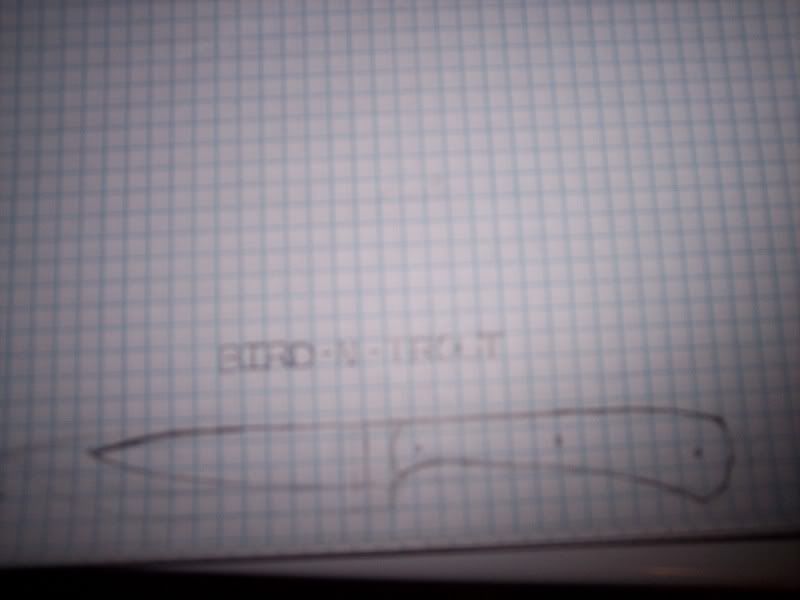
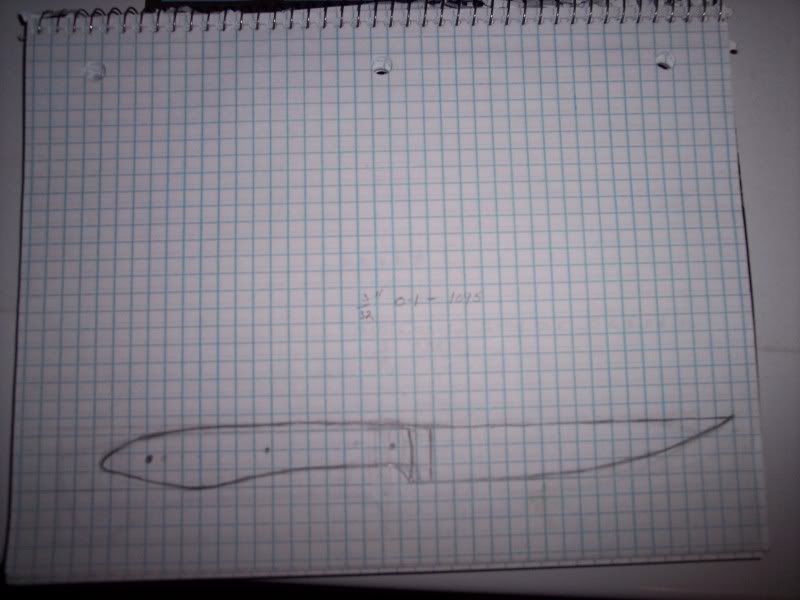
I will either use 1095 or O1 on one of these designs, not sure about handle material yet, maybe Honey Buffalo Horn, or black Buffalo Horn, then again a white camel bone with some scrim might work. What do you guys think?
Dale
This is how I design most of my knives, here are a couple of sketches of what I come up with for my first Bird & Trout. Any comments, suggestions welcome.
I will either use 1095 or O1 on one of these designs, not sure about handle material yet, maybe Honey Buffalo Horn, or black Buffalo Horn, then again a white camel bone with some scrim might work. What do you guys think?
Dale
Mike Turner
Well-Known Member
Dale this second drawing is sweeet I would also draw it with a straight blade or slightly drop point. Here are a couple examples of mine,
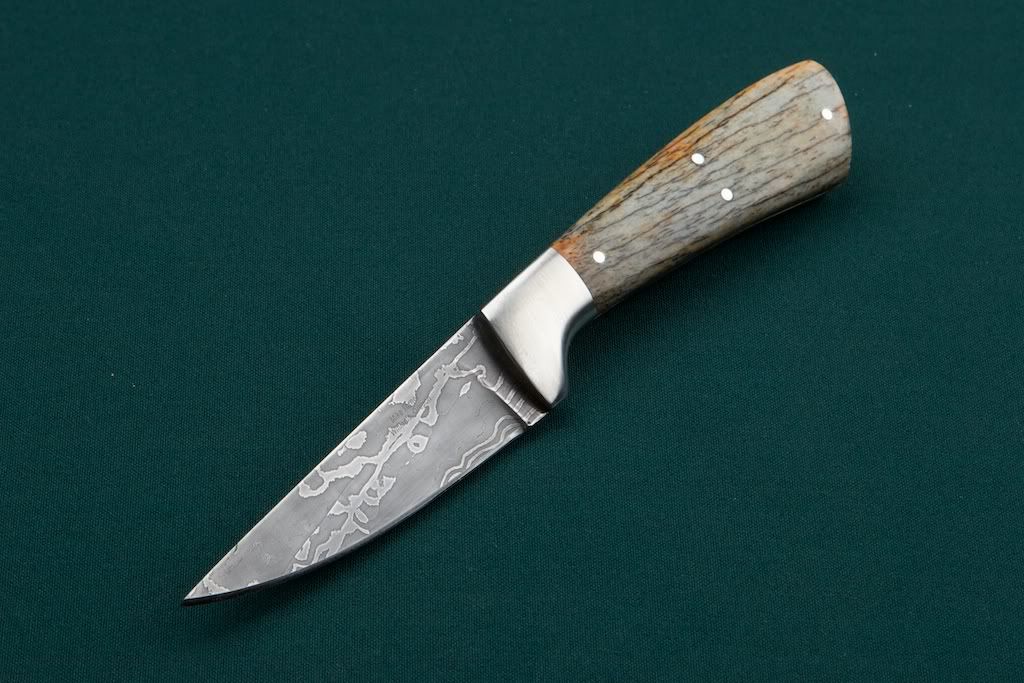
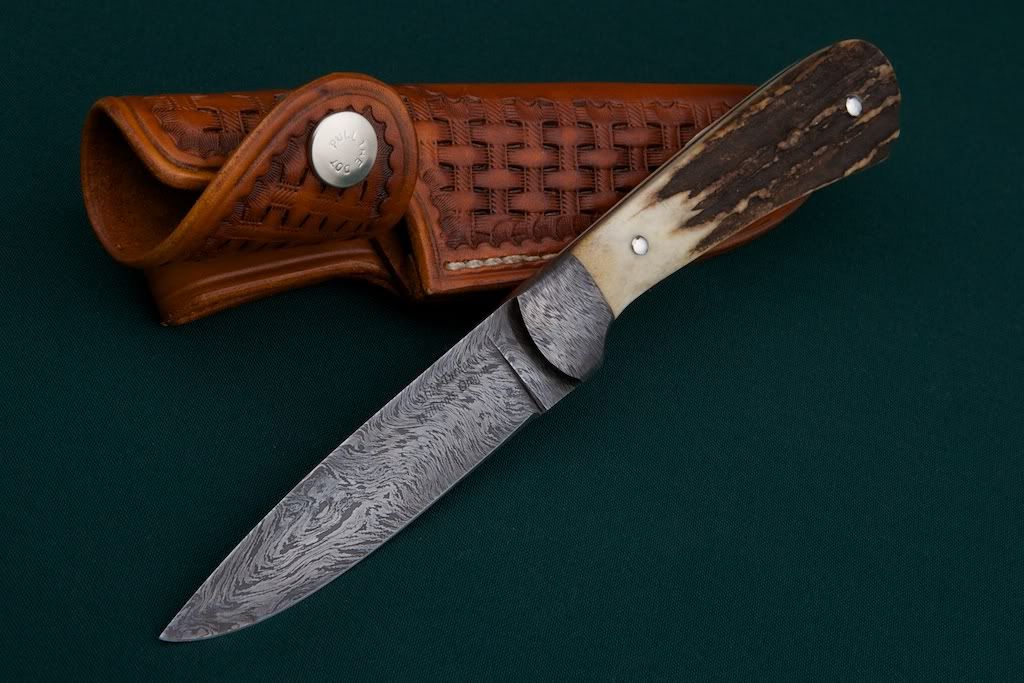
Both of these are about 1/8" thick with lots of distal taper for that fine work.
I would say make what you like just execute it nicely and it will look great and be an easy seller, these little knives are well suited to be an EDC and I have many customers that use them as that.

Mike Carter
Well-Known Member
This is the design I use for a bird and trout. I did this one with mammoth tooth handles.

Darrin Sanders
Moderator
The one thing I will mention is that buffalo horn is not a good handle choice for any knife used to clean game. A little blood or fat on it and you cant hold it because it is so slick.

SBuzek
Well-Known Member
The one thing I will mention is that buffalo horn is not a good handle choice for any knife used to clean game. A little blood or fat on it and you cant hold it because it is so slick.
Yep
Stan