Kevin Zito
KNIFE MAKER
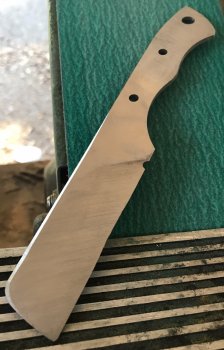
I always thought these were really cool looking so I decided to make one. Please note that this is very rough; I still have lots of grinding to do. Anyway, can anyone tell me what these are really used for???
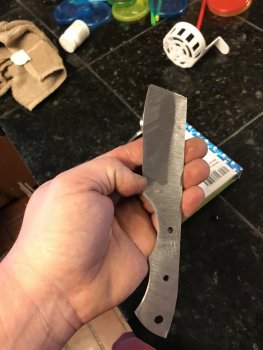

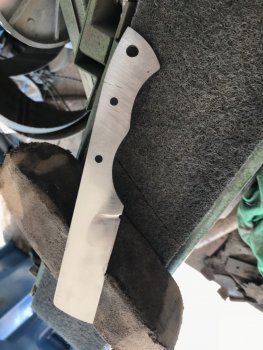
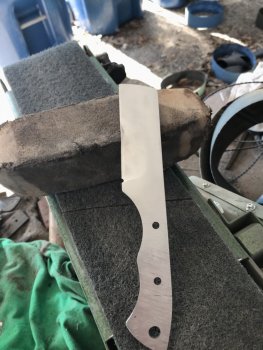

It's not forgedI love the one on the left as it’s super cool that it’s hand forged... I have to learn more about that
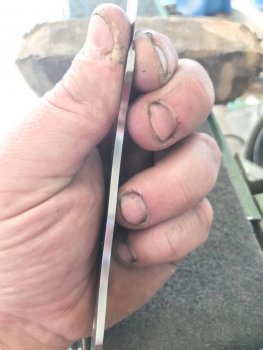
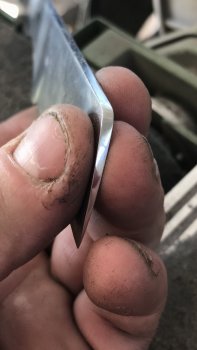
 I textured the flats during the normalizing and left most of quenching film on the flats.
That’s cool! Very nice looking!It's not forged


i was thinking maybe for rabbits squirrels and frogs. I’m definitely gonna try it out. Great looking cleavers by the way!I just did a pattern for a kitchen cleaver the other day but have to order in some 1/4 in steel (probably 1075) but mine wil be 12 inches overall so a bit more than the mini clleaver although I did do one early one for splitting rabbitsduring ceaning of them that is just 9 inches overall but have found it to be a bit acking in actua use so will do a more practical version to go with my kitchen knife set.

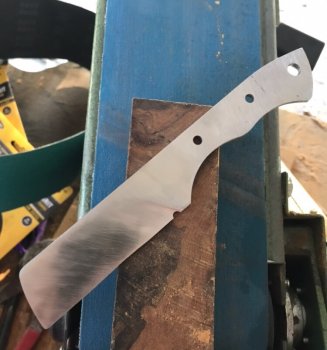

I am going to order one tonight. Any recommendations?Kevin - Are you using a file guide for your plunge cuts? If not, look into getting one or making one. It helped me immensely to establish uniformity and repetition.