

You are using an out of date browser. It may not display this or other websites correctly.
You should upgrade or use an alternative browser.
You should upgrade or use an alternative browser.
Not a kitchen knife plungeless grind question.
- Thread starter Chris Railey
- Start date

Gene Kimmi
KNIFE MAKER
I start by drawing a line on the blade to show where I want my bevels to stop. You don’t want to grind the bevel into where your scales will be. If you do, you can grind the handle and flats back down some.
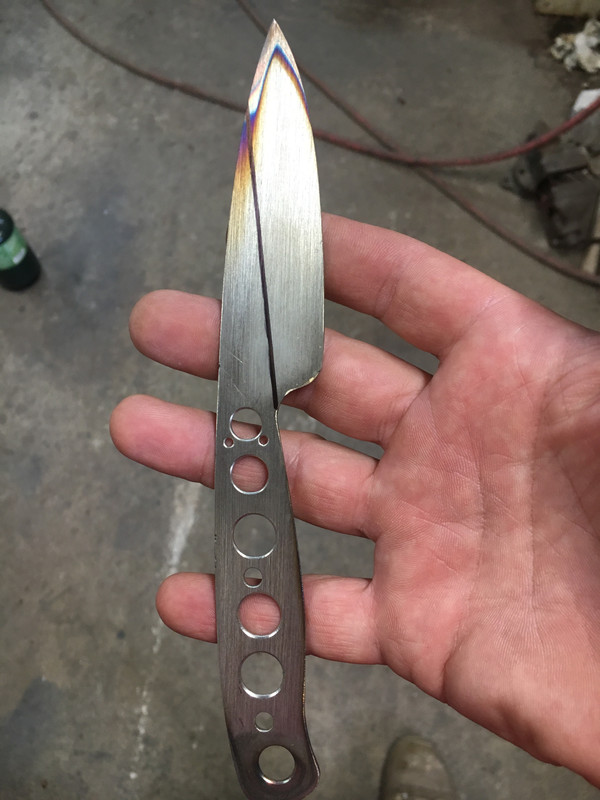
Here’s one of the blades at 220 off the grinder. I grind each grit like normal, then grind the knife vertical before switching to the next grit. Once I’m done with 120, I do all grinding vertical. The main thing to pay attention to is the cutting edge. It is easy to get some parts thicker than others. You want the edge to be as even as possible. A lot of that is putting pressure where needed when grinding in the vertical position.
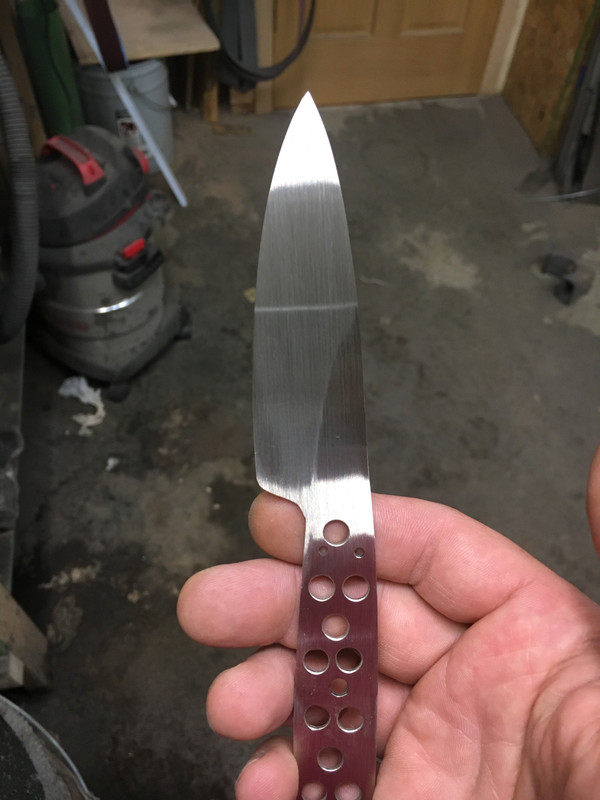
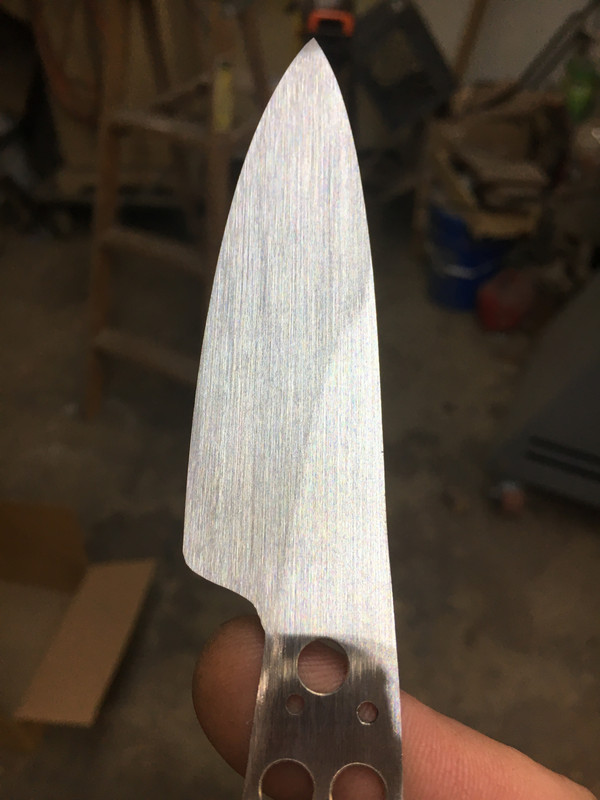
I’ll take the blade to 600 on the grinder then hit with a cork belt and finish up with a scotchbrite belt. If everything goes right, there should be little to no hand sanding.
In the last picture you can see the grind line between the flat and bevel. Once I use the scotchbrite belt, this will all blend together, so having a perfect grind line isn’t necessary.
Here’s one of the blades at 220 off the grinder. I grind each grit like normal, then grind the knife vertical before switching to the next grit. Once I’m done with 120, I do all grinding vertical. The main thing to pay attention to is the cutting edge. It is easy to get some parts thicker than others. You want the edge to be as even as possible. A lot of that is putting pressure where needed when grinding in the vertical position.
I’ll take the blade to 600 on the grinder then hit with a cork belt and finish up with a scotchbrite belt. If everything goes right, there should be little to no hand sanding.
In the last picture you can see the grind line between the flat and bevel. Once I use the scotchbrite belt, this will all blend together, so having a perfect grind line isn’t necessary.
Chris Railey
Well-Known Member
So basically I grind them the same as I do my Gyutos?
Gene Kimmi
KNIFE MAKER
I would say so. One thing I’ve found for me, the more belly a knife has, the harder it is to get an even grind while keeping an even edge.